










Blog
Global Size Chart Guide: Find the Right Size Anywhere in the World
Shopping for clothes online has made fashion more accessible than ever. Customers can now purchase T-shirts, shirts, jeans, dresses, children's clothing, shoes, and accessories from brands across different countries. However, one common challenge remains: understanding clothing sizes.
A customer may normally wear a Medium in one country, while the same person may see a different number when shopping from another country. US, UK, EU, and international sizing systems can all use different numbers and measurements. This is why a clear and easy-to-understand global size chart is an important part of any professional fashion website.
A good size chart helps customers understand the relationship between different sizing systems and, more importantly, helps them compare the available sizes with their own body measurements.
What Is a Global Size Chart?
A global size chart is a reference guide that helps shoppers understand clothing or footwear sizes used in different markets.
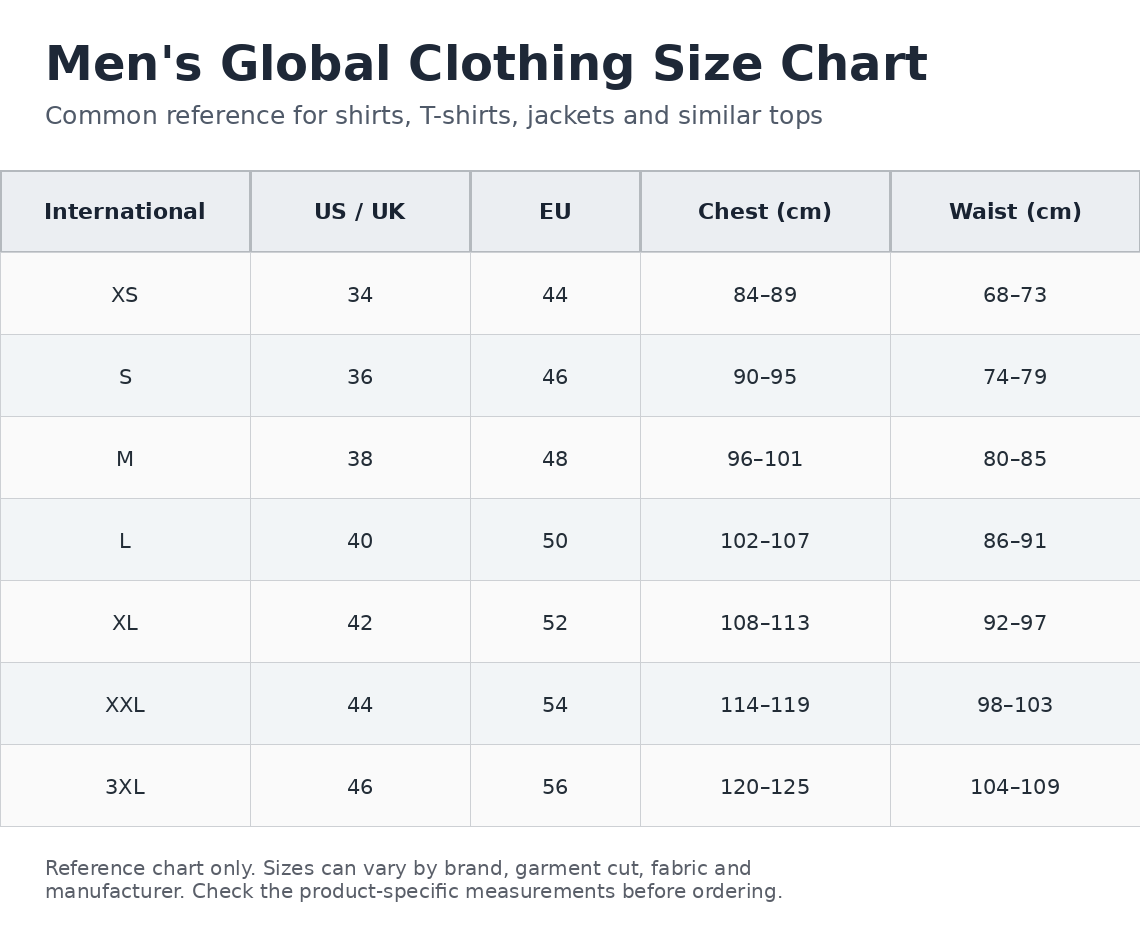
For example, a fashion website may display:
International: M
US: 38
UK: 38
EU: 48
Chest: 96–101 cm
Waist: 80–85 cm
This information allows customers from different countries to understand the size more easily.
However, a global size chart should not be treated as a universal standard. A Medium from one brand may not have exactly the same measurements as a Medium from another brand.
Therefore, the most useful size charts combine international conversions with actual measurements.
Why Size Charts Are Important for Online Shopping
When customers visit a physical store, they can usually try clothes before buying them. Online shoppers do not have this option.
A detailed size chart helps bridge that gap.
A good size guide can help customers:
- Understand international sizes
- Compare body measurements
- Choose between different sizes
- Reduce sizing confusion
- Shop from international brands
- Make more confident purchasing decisions
- Reduce size-related returns and exchanges
For an e-commerce website, the size chart should be easy to find and understand.
Ideally, every clothing product should have a "Size Guide" link close to the size selector.
Understanding International Size Systems
Different regions commonly use different sizing systems.
International Sizes
These usually include:
XS, S, M, L, XL, XXL, 3XL
They are widely used for T-shirts, polo shirts, casual clothing, sportswear, and other garments.
US Sizes
The United States commonly uses numerical sizing for many men's, women's, and children's garments.
UK Sizes
The UK also uses numerical sizing, particularly for women's fashion.
EU Sizes
European sizing commonly uses numerical sizes and can differ significantly from US and UK numbers.
Because these systems are not identical, a size-conversion table can be useful for international customers.
Women's Global Size Chart
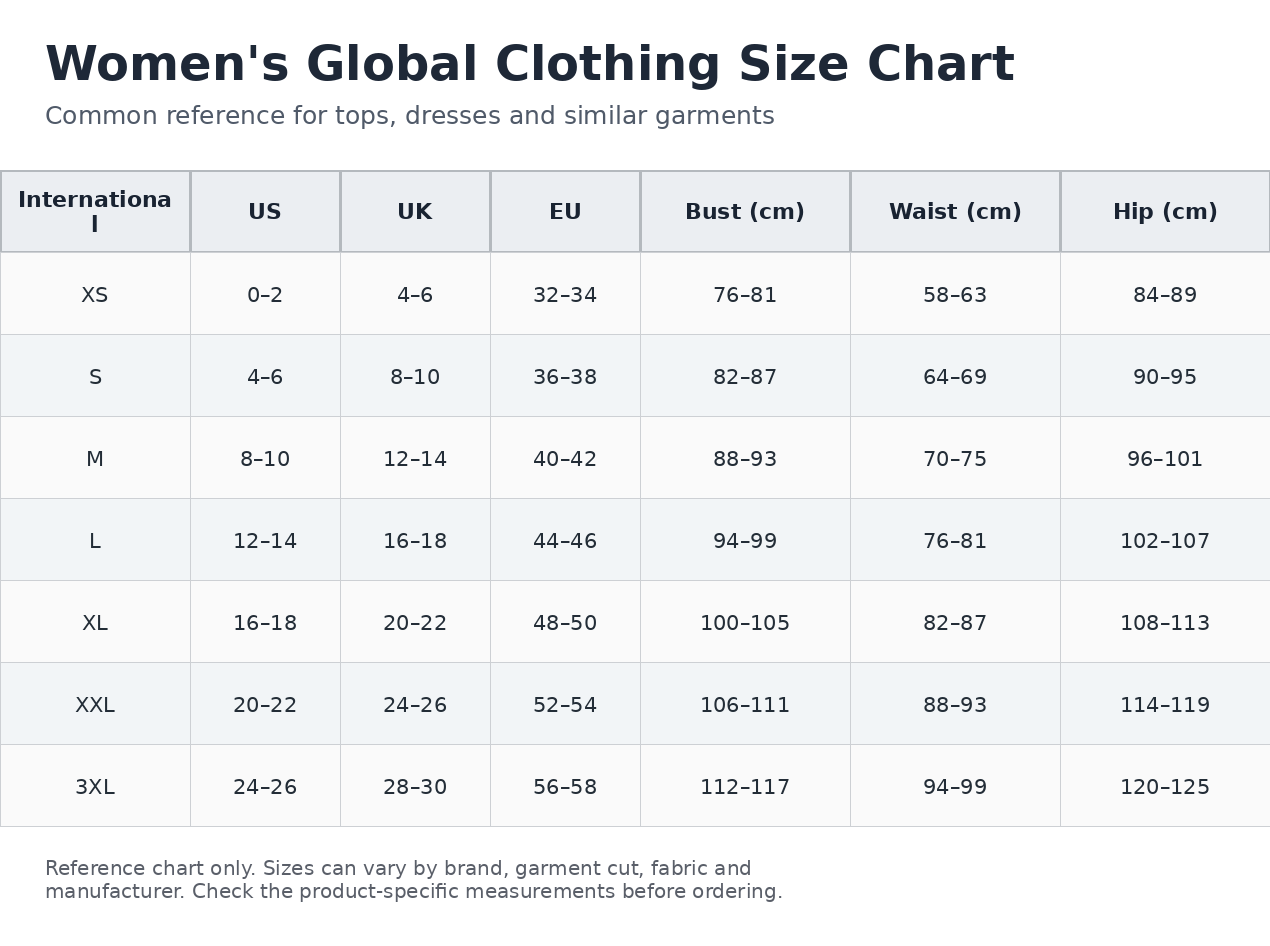
Women's clothing can be particularly confusing because different brands may use different US, UK, and EU conversions.
Bust, waist, and hip measurements provide more useful information than relying only on the size number.
Kids' Global Size Chart
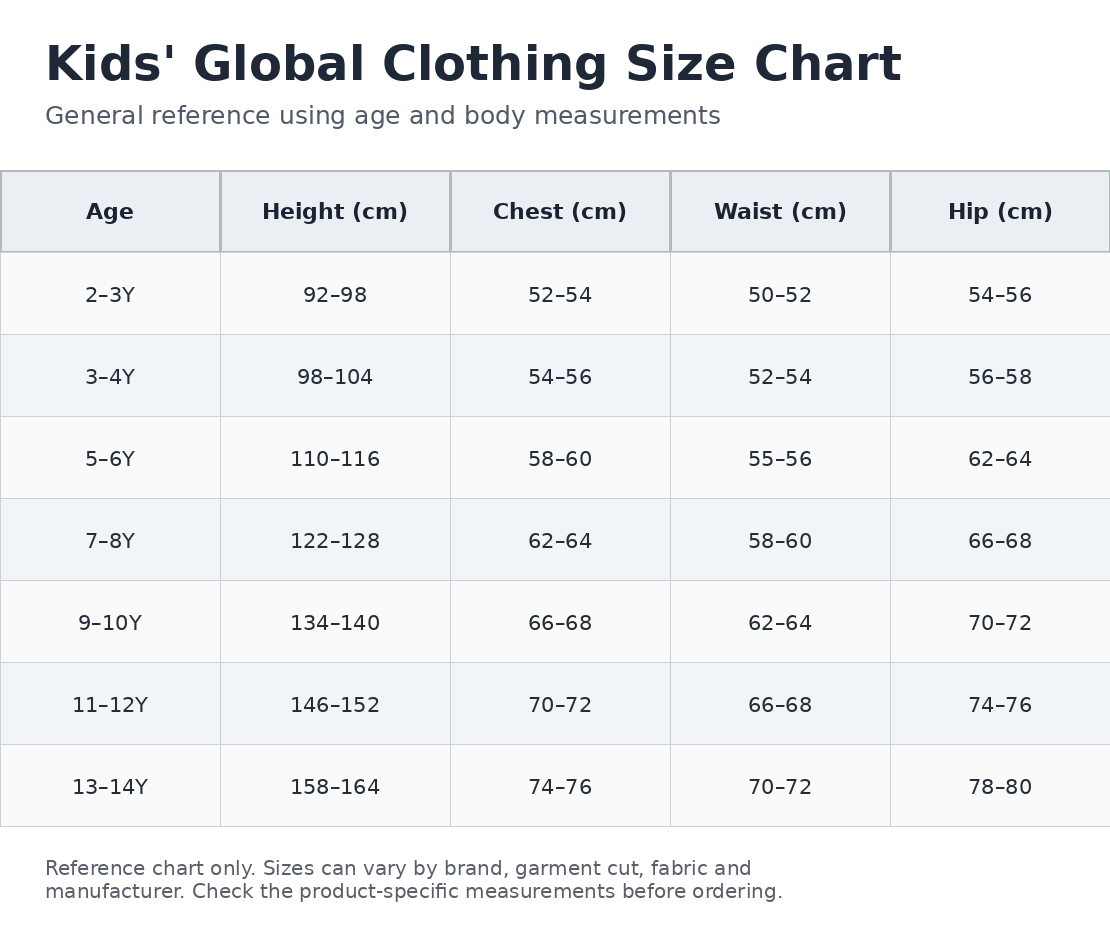
Children's clothing requires a slightly different approach.
Age can be useful, but height and body measurements are often more reliable because children of the same age can have different body proportions.
How to Measure Yourself Correctly
A size chart is only useful when measurements are taken correctly.
Chest / Bust
Wrap the measuring tape around the fullest part of your chest or bust. Keep the tape horizontal and avoid pulling it too tightly.
Waist
Measure around your natural waist. Keep the measuring tape comfortable rather than compressing your body.
Hips
Measure around the fullest part of your hips.
Shoulder
Measure from one shoulder point across the back to the other shoulder point.
Sleeve Length
Measure from the shoulder point down toward the wrist.
Inseam
For trousers and jeans, measure from the crotch area down the inside of the leg to the desired length.
Body Measurements vs Garment Measurements
This is extremely important for your website.
Body measurement means the size of the customer's body.
For example:
Chest: 100 cm
Garment measurement means the actual measurement of the finished garment.
For example:
T-shirt chest: 108 cm
The garment may be larger than the body measurement because the design needs additional room for movement and comfort.
Therefore, clearly state which type of measurement your size chart uses.